 LUMP Depot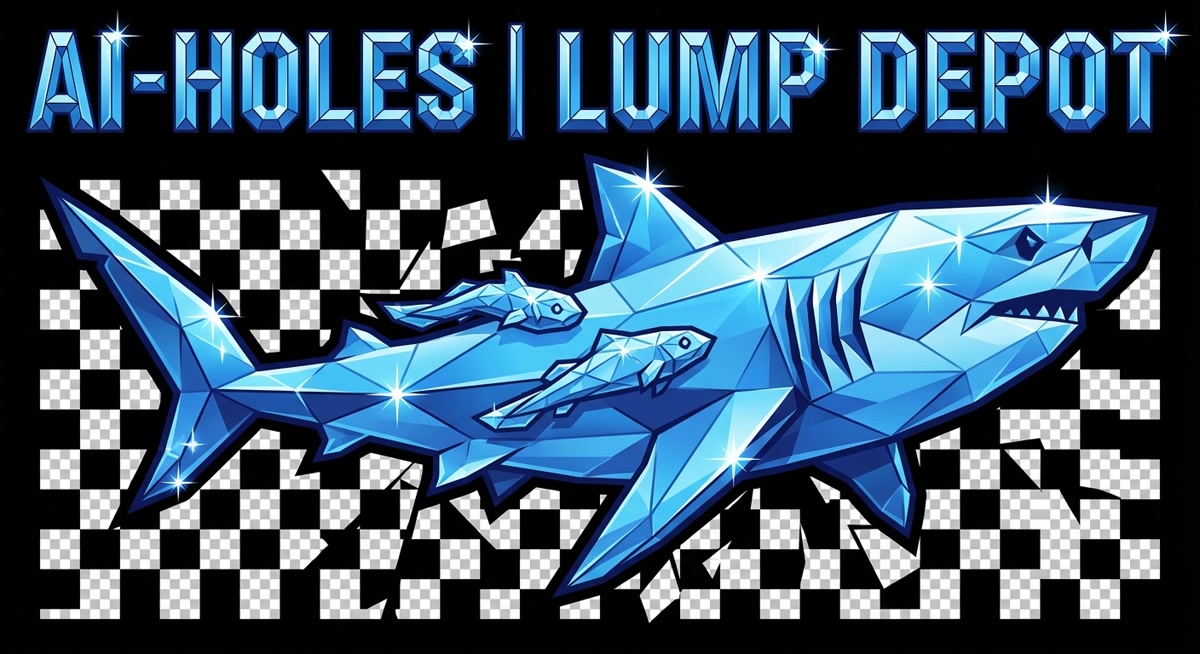
I asked an image model for a logo the other day. Simple thing, clean mark, transparent background. You know what I got? A logo on a checkerboard. Not actual transparency. A simulation of transparency. The kind of thing that makes every "remove background" tool on the planet light up with ad revenue.
It's obvious when you think about it. The model was trained on images. Images don't have alpha channels in the way a compositor expects. So it learned what "transparent" looks like: gray and white squares. And it gave me that. Now I have a logo that's harder to use than if it had just come on a solid color. I've used vectorizers before. I'll use them again. But the point stands.
The cottage industry of AI cleanup
There are countless single-purpose sites now. AI background removers. AI image croppers. AI upscalers. AI watermark strippers. Each one does one thing, each one runs ads, each one exists because the big models leave a hole and someone figured out how to monetize the gap.
I'm not saying that's bad. Someone has to fill these holes. The question is who.
Sharks and remoras
Sharks have remoras. The little fish attach, eat parasites, clean the host. The shark gets healthier. The remora gets fed. It's symbiotic. The relationship works because the shark doesn't eat the remora.
What we're building right now looks different. The big fish keep absorbing everything. Every feature gap becomes a roadmap item. Every single-purpose tool becomes a target. "We could add that." And they do. The ecosystem of small fixers, the click-baiters and ad-funded one-trick sites, they're not parasites. They're the cleanup crew. But the instinct is to swallow them whole.
In the long run, that leads to ruin. You get a shark with no remoras. A model that does everything poorly instead of a few things well, surrounded by specialists that do the rest. Or you get nothing at all: the specialists die off, the big model never quite gets around to the edge cases, and we're all stuck with checkerboard logos forever.
So what are the biggest AI-holes?
Transparency is one. Real alpha channels, not checkerboard placeholders. Vector output is another. Give me SVG, not a raster I have to trace. Consistent character identity across images. Proper typography and legible text in generated graphics. Reliable structure: tables that are actually tables, layouts that hold when you resize. Watermark-free output when you have the rights. The list goes on.
Some of these will get solved by the big players. Some won't. The ones that don't will keep feeding the cottage industry. And that's fine, maybe. The alternative is waiting for a single vendor to do everything, which is the same as waiting for a shark to grow its own remoras. It doesn't work that way.
tl;dr: AI leaves obvious gaps. Transparent backgrounds that aren't, vector output that isn't, and a dozen other single-feature holes. A whole ecosystem of small tools has sprung up to fill them. The question isn't whether that's good or bad. It's whether we let the big fish eat the remoras or let the symbiosis do its job. I'm betting on the remoras.